How to Become a Judge in India: Complete 2026-2027 Guide — Practice Rule Updated August 2026
By Advocate Jyoti Saxena | LLB, LLM, CS | Bar Council of Rajasthan | Last Updated: August 2026
| URGENT UPDATE — August 21, 2026 (2026 INSC 904): The Supreme Court changed the practice rule on August 21, 2026. TWO scenarios now apply — check which one covers your target exam: SCENARIO A — Notifications issued May 20, 2025 to March 31, 2027: NO practice required. Fresh law graduates eligible. Deemed to have 1 year practice. No certificate needed. RJS 2026 (Feb 27, 2026), GJS 2026 (Apr 2026) — FRESH GRADUATES ELIGIBLE. On selection: Trainee Judicial Officer — 1 year Judicial Academy training + 6 months clerkship under District Judge + 6 months under HC Judge. SCENARIO B — Notifications issued from April 1, 2027 onwards: 1 year actual Bar practice mandatory. Certificate required. Same training and clerkship after selection. |
How to become a judge in India is a question that gets a different answer in 2026 than it did even six months ago. On August 21, 2026, the Supreme Court in its review order (2026 INSC 904) modified the practice requirement for Civil Judge (Junior Division) examinations — making fresh law graduates eligible for most 2026 notifications without any practice certificate. At the same time, BNS, BNSS, and BSA replaced IPC, CrPC, and the Indian Evidence Act from 1 July 2024, changing the criminal law syllabus for every state judiciary exam. This guide reflects where things actually stand in August 2026.
Two Paths to Becoming a Judge in India
| Path | Entry Post | Who It Is For | Eligibility |
| Judicial Services Exam | Civil Judge (Junior Division) | Law graduates at ground level — most common route | LLB + Bar Council enrolment + practice requirement (see table below) + state age limit |
| Higher Judicial Services (HJS) | Additional District Judge / District Judge (Entry) | Experienced advocates entering at District Judge level directly | Minimum 7 years continuous Bar practice — unchanged by August 2026 order |
| Promotion | Civil Judge → District Judge → High Court | Serving judicial officers | Performance, seniority, and service record — no exam |
| Elevation from Bar | High Court / Supreme Court Judge | Senior advocates with 10+ years standing | Presidential appointment on Collegium recommendation — Articles 217 and 124 |
Civil Judge Eligibility 2026-2027 — Four Requirements
Requirement 1 — Indian Citizenship
Must be a citizen of India. Uniform across all states.
Requirement 2 — LLB Degree
LLB from a BCI-recognised institution — three-year LLB after graduation or five-year integrated LLB after Class 12. Get a BCI recognition certificate from your institution confirming recognition covers your academic year.
Requirement 3 — Bar Council Enrolment
Enrol with your State Bar Council under Section 24 of the Advocates Act, 1961 immediately after LLB. The practice clock starts at provisional enrolment — not at LLB, not at AIBE. Every month of delay is a month added to your eligibility wait.
Requirement 4 — Practice Rule (Updated August 21, 2026)
| Practice Requirement — Which Rule Applies to You: Notifications issued May 20, 2025 to March 31, 2027: → NO practice needed. Fresh LLB graduates eligible. → Deemed to have 1 year practice. No certificate required. → On selection: Trainee Judicial Officer designation. → Must complete 1 year Judicial Academy + 1 year clerkship before independent posting as regular Civil Judge. Notifications issued from April 1, 2027 onwards: → 1 year actual Bar practice mandatory. → Practice certificate required — from Principal Judicial Officer (PJO) of your court. OR from an advocate of 10+ years standing — but that certificate must be endorsed by the PJO. A 10-year advocate certificate without PJO endorsement is NOT valid. → Law clerk experience with sitting judge counts. → Same training and clerkship after selection. Source: Supreme Court review order dated August 21, 2026 (2026 INSC 904) Bench: CJI Surya Kant + Justice Augustine George Masih (majority) Justice K. Vinod Chandran: DISSENTED |
Age Limit to Become a Civil Judge — State-Wise 2026-2027
| State | Min Age | General Max | SC/ST Max | OBC/BC Max | Women Max | Age Cut-off |
| Rajasthan (RJS) | 21 | 40 | 45 (+5) | 45 (+5) | 45 (+5) | Notification date |
| UP PCS J | 22 | 35 | 40 (+5 UP domicile) | 40 (+5 UP domicile) | 40 (+5 UP domicile) | 1 July of exam year |
| Gujarat (GJS) | 21 | 35 | 38 (+3) | 38 SEBC (+3) | 38 (+3) | Notification date |
| Bihar | 22 | 35 | 40 (+5) | 38 (+3) | 40 (all women) | 01.08.2025 (33rd exam) |
| Delhi (DJS) | 21 | 32 | 37 (+5) | 35 (+3) | 35 General/37 SC/ST | 1 January |
| Haryana | 21 | 42 | 47 (+5) | 47 (+5) | 47/45 various | 31 January |
| Punjab | 21 | 37 | 42 (+5) | 40 (+3) | 42 divorced/widows | Notification date |
| MP | 21 | 35 | 40 (+5) | 38 (+3) | 40 (all women) | 1 January |
| Uttarakhand | 22 | 35 | 40 (+5) | 38 (+3) | 40 (+5) | Notification date |
| Key Point on Age Relaxation: Reserved category relaxation applies ONLY to candidates with caste certificates from THAT state — not from your home state. A Rajasthan OBC candidate applying for UP PCS J = treated as General category — maximum age 35, no fee waiver, no seat reservation. |
Step-by-Step — How to Become a Civil Judge in India
Step 1 — Complete Your LLB Degree
Three-year LLB after any bachelor’s degree, or five-year integrated law programme after Class 12. Any BCI-recognised institution qualifies — not only NLUs.
Step 2 — Enrol with State Bar Council Immediately
Enrol the day you receive your LLB degree or provisional pass certificate. Do not wait for convocation. The practice clock starts at provisional enrolment. For April 2027+ notifications, every month of delay is a month added to your eligibility wait.
Step 3 — Watch Your Target State Notification
There is no single national exam to become a judge in India. Track each state’s official website separately. Rajasthan High Court — hcraj.nic.in | Gujarat High Court — gujarathighcourt.nic.in | UPPSC — uppsc.up.nic.in | BPSC — bpsc.bih.nic.in | Delhi HC — delhihighcourt.nic.in.
Step 4 — Clear Three-Stage Judicial Services Examination
| Stage | What It Tests | Key Points |
| Preliminary Exam | Objective MCQ — law + GK | Qualifying only in most states. Negative marking in GJS (0.33) and UP PCS J (0.33). No negative marking in RJS. |
| Mains Examination | Descriptive — judgment writing, problem questions, essays | Determines final selection. Multiple law papers + language papers. Minimum qualifying marks per paper mandatory independently. |
| Viva Voce (Interview) | Personality, legal reasoning, judicial temperament | Conducted by High Court judge panel. Marks: 35 (RJS), 50 (GJS/UKPSC), 100 (UP PCS J). Added to Mains for final merit. |
Step 5 — Complete Judicial Training After Selection
For candidates selected under the August 2026 order (Scenario A): one year Judicial Academy training + six months clerkship under District/HJS Judge + six months under High Court Judge before independent posting. For other candidates: one year Judicial Academy training. All newly appointed Civil Judges undergo mandatory training before taking charge of a court.
What Is Tested in Judiciary Exam 2026-2027
| Subject Area | Before July 2024 | From July 2024 |
| Criminal Substantive Law | Indian Penal Code (IPC) 1860 | Bharatiya Nyaya Sanhita (BNS) 2023 |
| Criminal Procedure | Code of Criminal Procedure (CrPC) 1973 | Bharatiya Nagarik Suraksha Sanhita (BNSS) 2023 |
| Evidence Law | Indian Evidence Act (IEA) 1872 | BharatiyaSakshyaAdhiniyam (BSA) 2023 |
| Civil Law | CPC, Contract Act, TPA, SRA, Personal Laws | Same — no change |
| Constitution | Constitution of India | Same — no change |
Writing “Section 302 IPC” in a 2026 Mains answer for a post-July 2024 offence is citing an outdated code. The correct citation is Section 103 BNS. Know BNS, BNSS, and BSA section numbers.
Civil Judge Salary in India 2026
| Component | Amount | Notes |
| Basic Pay (Entry Level) | Rs. 77,840 per month | Pay Level J-1 — Second National Judicial Pay Commission |
| Dearness Allowance | ~Rs. 32,000-33,000 | Approx 42% of basic — revised periodically |
| HRA / Accommodation | Varies by posting | Often official court accommodation provided |
| Other Allowances | Rs. 3,000-6,000 | Sumptuary, conveyance, medical |
| Approximate Gross | Rs. 1,10,000 – Rs. 1,20,000 | Basic + DA + allowances |
| Approximate In-Hand | Rs. 85,000 – Rs. 1,05,000 | After NPS, TDS, professional tax |
FAQs — How to Become a Judge in India 2026-2027
Can a fresh law graduate become a civil judge in India in 2026?
Yes — for most 2026 exam notifications. The Supreme Court in its August 21, 2026 review order (2026 INSC 904) held that for notifications issued between May 20, 2025 and March 31, 2027, fresh law graduates are eligible without any practice certificate. They are deemed to have completed one year of practice. RJS 2026 (notification issued February 27, 2026) and GJS 2026 (notification issued April 2026) both fall in this window — fresh graduates are eligible. On selection, they are designated Trainee Judicial Officers and must complete one year of Judicial Academy training and one year of structured clerkship before independent posting.
What is the practice requirement for civil judge exam from April 2027?
For notifications issued from April 1, 2027 onwards, one year of actual Bar practice as an enrolled advocate is mandatory. The practice clock runs from the date of provisional Bar Council enrolment — not from the LLB date, not from AIBE. A practice certificate from the Principal Judicial Officer of the court where you practise is required. Law clerk experience with a sitting judge also counts toward the one-year requirement. On selection, the same structured training applies — one year Judicial Academy training and one year clerkship.
What is the age limit to become a civil judge in India?
Age limits vary by state. General category: Rajasthan 21-40, UP 22-35, Gujarat 21-35, Bihar 22-35, Delhi 21-32, Haryana 21-42, Punjab 21-37. Reserved category candidates get 3-5 years relaxation — but only with valid caste certificates from that state. Out-of-state candidates with reserved certificates are treated as General category. Always check the specific notification — age cut-off dates also differ: UP uses 1 July, Delhi uses 1 January, Bihar used 1 August 2025 for its 33rd exam.
What is the difference between Civil Judge and District Judge?
A Civil Judge (Junior Division) is the entry-level judicial officer handling civil and criminal cases in subordinate courts. A District Judge heads the district judiciary — handling sessions cases and high-value civil matters. Entry to District Judge level is either by promotion from within the judiciary (15-20 years) or directly through the Higher Judicial Services exam which requires 7 years of continuous practice as an advocate. The August 2026 SC order modified only the Civil Judge (JD) practice requirement — HJS still requires 7 years of practice.
How long does it take to become a civil judge after LLB?
For 2026 notifications (Scenario A): from LLB — enrol immediately, appear for exam, pass within 1-2 years, training for 2 years, posting. Best case: 3-4 years after LLB. For April 2027+ notifications (Scenario B): enrol, complete 1 year of practice, then prepare and appear. Best case: 4-5 years after LLB. The real variable is how many attempts it takes to clear the exam — most successful candidates clear in 2-3 attempts. The time from selection to independent posting is now longer under the new training regime.
Related Articles
→ RJS Eligibility Criteria 2026-2027: Age Limit, Practice Rule and Qualification — Complete RJS eligibility — age 40 general, 45 reserved — August 2026 rule
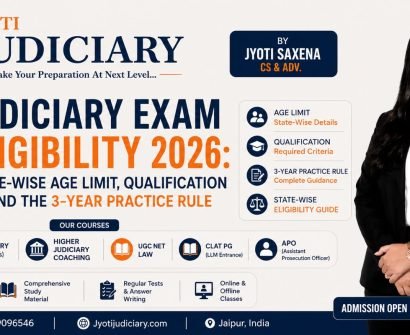
→ Judiciary Exam Eligibility 2026-2027: State-Wise Age Limit and Practice Rule — All states — RJS, UP, GJS, Bihar, Delhi, Haryana — complete state-wise table
→ Civil Judge Salary India 2026: State-Wise Pay Scale and In-Hand Salary — Rs. 77,840 entry basic — what you earn after clearing the exam
→ Higher Judiciary Coaching: Best HJS ADJ Online Classes in India 2026 — HJS exam requires 7 years practice — unchanged by August 2026 SC order
→ RJS Online Coaching — Live Classes, Answer Writing and Verified Results — RJS 2026 — fresh graduates eligible — preparation with verified selections
→ BNSS vs CrPC: Complete Section-Wise Comparison for Judiciary Exam — BNSS replaces CrPC from July 2024 — new section numbers for criminal procedure
→ Bail Law India 2026: Section 479 BNSS, Types of Bail and SC Cases — Section 479 BNSS — undertrial bail — tested in judiciary Mains criminal law paper
→ How Working Advocates Should Prepare for RJS 2026 — Practice experience + exam preparation — how to balance both
→ RJS vs APO: Which Is Better for Law Graduates in Rajasthan? — Compare RJS and APO — eligibility, salary, career growth
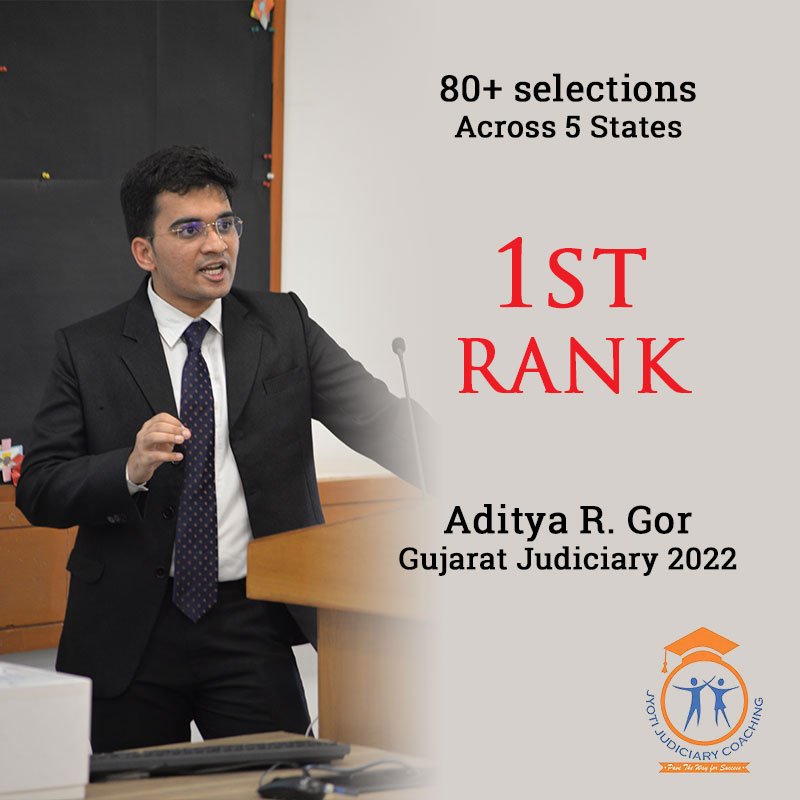
→ Best Gujarat Judiciary Coaching — GJS Results — GJS 2026 — fresh graduates eligible — Aditya Gaur 1st Rank GJS 2022
All the best — from Jyoti Judiciary Coaching
Written by Advocate Jyoti Saxena — LLB, LLM, CS, Bar Council of Rajasthan, practising at Jaipur Family Court, Jaipur District Court, and the Rajasthan High Court. Eligibility information reflects the Supreme Court review order dated August 21, 2026 (2026 INSC 904) and the new criminal codes in force from 1 July 2024. Age limits verified from official state notifications for 2026 cycles. Always verify from the official website of your target state before applying. Contact: +91 99290 96546 | jyotijudiciary.com