Judiciary Exam Eligibility 2026-2027: Practice Rule, State-Wise Age Limit and Documents Required
By Advocate Jyoti Saxena | LLB, LLM, CS | Practising Advocate, Rajasthan High Court | Last Updated: August 2026
| CRITICAL UPDATE — August 21, 2026 (2026 INSC 904): The Supreme Court on August 21, 2026 completely changed the practice rule. Here is exactly what applies now — read carefully before planning your exam: PERIOD 1 — Notifications issued May 20, 2025 to March 31, 2027: FRESH LAW GRADUATES CAN APPLY — NO PRACTICE REQUIRED You are DEEMED to have completed 1 year of practice for application purposes. You do NOT need a practice certificate. If selected: You are appointed as TRAINEE JUDICIAL OFFICER (not regular Civil Judge). You must complete: 1 year Judicial Academy training + 1 year clerkship. PERIOD 2 — Notifications issued FROM April 1, 2027 onwards: 1 YEAR ACTUAL BAR PRACTICE MANDATORY You must have 1 year of actual practice as an advocate. You must produce a practice certificate. If selected: 1 year Judicial Academy training + 1 year clerkship still required. Case: Review of All India Judges Association v. UOI (2026 INSC 904) Date: August 21, 2026 Bench: CJI Surya Kant + Justice Augustine George Masih (majority) Justice K. Vinod Chandran — DISSENTED — wanted 3 years to continue |
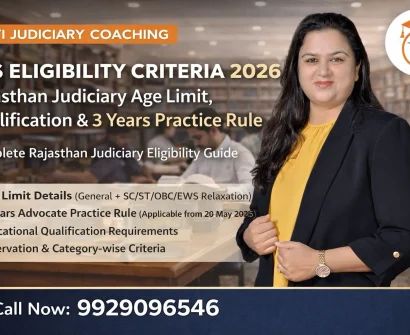
Judiciary exam eligibility in India has changed three times since 2002. The most recent change came on August 21, 2026 — two days before this page was updated — when the Supreme Court in its review order (2026 INSC 904) gave significant relief to fresh law graduates. Candidates who apply for judiciary exams under notifications issued before March 31, 2027 do not need any prior practice. Candidates applying under notifications issued from April 1, 2027 onwards need exactly 1 year of Bar practice. The rest of this page covers state-wise age limits with exact category-wise relaxations and documents required.
Practice Rule — What Applies to Your Exam (Most Important Section)
| Your Exam Notification Date | Practice Required to Apply? | What Happens After Selection? |
| Notification issued between May 20, 2025 and March 31, 2027 | NO — Fresh law graduates eligible. Deemed to have 1 year practice. No certificate needed. | Appointed as Trainee Judicial Officer. Must complete 1 year Judicial Academy training + 6 months clerkship under District Judge + 6 months under High Court Judge. Only then appointed as regular Civil Judge. |
| Notification issued from April 1, 2027 onwards | YES — 1 year actual Bar practice mandatory. Must produce practice certificate. | Same as above — 1 year training + 1 year clerkship after selection. |
| Who Gets the Fresher Benefit — Exactly: You get the “no practice required” benefit if: → Your target exam notification was issued (or will be issued) before March 31, 2027. Examples: → RJS 2026 notification — issued February 27, 2026 — FRESHER ELIGIBLE ✅ → GJS 2026 notification — issued April 24, 2026 — FRESHER ELIGIBLE ✅ → Bihar 33rd exam — notification dates pre-March 2027 — FRESHER ELIGIBLE ✅ → UP PCS J 2026 — if notified before March 31, 2027 — FRESHER ELIGIBLE ✅ You DO NOT get the fresher benefit if: → The notification is issued on or after April 1, 2027. → In that case 1 year actual practice is mandatory. Key rule for Trainee Judicial Officers: You will be designated Trainee Judicial Officer (not Civil Judge) until you complete the full training and clerkship period. You will NOT be posted to a court independently until training is complete |
State-Wise Age Limit — Category-Wise (Updated 2026)
Every state has its own age limits and category-wise relaxations. Read the table carefully — many candidates assume all states have the same rules. They do not.
Rajasthan (RJS)
| Category | Minimum Age | Maximum Age | Notes |
| General | 21 years | 40 years | Age cut-off date as per notification |
| SC / ST of Rajasthan | 21 years | 45 years | 5 years relaxation |
| OBC / MBC / EWS of Rajasthan | 21 years | 45 years | 5 years relaxation |
| Women (all categories) | 21 years | 45 years | 5 years relaxation |
| Ex-Servicemen | 21 years | 50 years | 10 years relaxation — max 50 |
| PwD (Persons with Disability) | 21 years | 45 years | 5 additional years on top of category limit |
| Final-year LLB students | 21 years | 40 years | Can apply but must produce degree before Mains |
Conducting authority: High Court of Rajasthan | Language: Hindi in Devanagari script mandatory | Exam stages: Prelims (100 marks, no negative marking) + Mains (300 marks) + Interview (35 marks)
Uttar Pradesh (UP PCS J)
| Category | Minimum Age | Maximum Age | Notes |
| General | 22 years | 35 years | Age as of 1 July of exam year |
| SC / ST of UP (UP domicile only) | 22 years | 40 years | 5 years relaxation — only UP domicile holders |
| OBC of UP (UP domicile only) | 22 years | 40 years | 5 years relaxation — only UP domicile holders |
| Women of UP (UP domicile only) | 22 years | 40 years | 5 years relaxation — UP domicile women |
| PwD | 22 years | 50 years | 15 years relaxation |
| Out-of-state reserved categories | 22 years | 35 years | Treated as General category — NO relaxation |
Age cut-off date: 1 July of exam year | Conducting authority: UPPSC | Language: Hindi in Devanagari script mandatory | Exam: Prelims + Mains + Interview
Gujarat (GJS)
| Category | Minimum Age | Maximum Age | Notes |
| General | 21 years | 35 years | Age as per notification date |
| SC / ST of Gujarat | 21 years | 38 years | 3 years relaxation |
| SEBC (OBC) of Gujarat | 21 years | 38 years | 3 years relaxation |
| EWS of Gujarat | 21 years | 38 years | 3 years relaxation |
| Women of Gujarat (reserved) | 21 years | 38 years | 3 years relaxation |
| PwD / PwBD | 21 years | 45 years | 10 years relaxation |
| No minimum age specified in notification | 21 years | — | No minimum fixed historically — verify from current notification |
Conducting authority: High Court of Gujarat | Language: Gujarati proficiency test in Prelims (Paper II — 50 marks, 40% qualifying) | Computer certificate mandatory | AIBE mandatory for graduates from 2009-10 onwards
Bihar (BPSC)
| Category | Minimum Age | Maximum Age | Notes |
| General (Male) | 22 years | 35 years | Age as of 01.08.2025 for 33rd exam |
| SC / ST of Bihar | 22 years | 40 years | 5 years relaxation |
| OBC of Bihar (Non-Creamy Layer) | 22 years | 38 years | 3 years relaxation |
| EBC (Extremely Backward Class) of Bihar | 22 years | 38 years | 3 years relaxation |
| General (Female — unreserved) | 22 years | 40 years | Bihar gives all women 5 years relaxation |
| Reserved category women of Bihar | 22 years | 40 years | Same upper limit — not cumulative beyond 40 |
| PwD of Bihar | 22 years | 45 years | 10 years relaxation — max 45 |
Age cut-off date: 01.08.2025 for 33rd Bihar Judicial Service Exam | Conducting authority: BPSC | Exam: Prelims + Mains + Interview
Delhi (DJS)
| Category | Minimum Age | Maximum Age | Notes |
| General | 21 years | 32 years | Age as of 1 January of exam year — tightest window in India |
| SC / ST | 21 years | 37 years | 5 years relaxation |
| OBC (NCL) | 21 years | 35 years | 3 years relaxation |
| Women — General | 21 years | 35 years | 3 years relaxation |
| Women — SC/ST | 21 years | 37 years | 5 years relaxation |
| Ex-Servicemen / Short Service Commission | 21 years | 37 years | 5 years relaxation |
| PwD | 21 years | 42 years | 10 years relaxation |
Age cut-off date: 1 January of exam year | Conducting authority: High Court of Delhi | No domicile bar — all Indian citizens eligible | Exam: Prelims + Mains + Interview
Haryana (HPSC)
| Category | Minimum Age | Maximum Age | Notes |
| General | 21 years | 42 years | Highest general upper limit in India — age as of notification date |
| SC / ST of Haryana | 21 years | 47 years | 5 years relaxation |
| BC (OBC) of Haryana | 21 years | 47 years | 5 years relaxation |
| Unmarried Women of Haryana | 21 years | 45 years | 3 years additional — max 45 |
| Divorced Women / Widows / Women living separately (Haryana) | 21 years | 47 years | 5 years relaxation |
| PwD of Haryana | 21 years | 52 years | 10 years relaxation (15 for SC/BC PwD of Haryana) |
| Ex-Servicemen (Haryana) | 21 years | Military service + 3 years | Subject to max 5 years total relaxation |
Conducting authority: Haryana Public Service Commission (HPSC) | Language: Hindi/Punjabi knowledge | Reserved category relaxations strictly for Haryana domicile candidates
Punjab (PPSC)
| Category | Minimum Age | Maximum Age | Notes |
| General | 21 years | 37 years | Age as per notification |
| SC / ST of Punjab | 21 years | 42 years | 5 years relaxation |
| BC (OBC) of Punjab | 21 years | 40 years | 3 years relaxation |
| Divorced Women / Widows of Punjab | 21 years | 42 years | 5 years relaxation |
| PwD (Punjab domicile) | 21 years | 47 years | 10 years relaxation |
| Central/State Government Employees | 21 years | 45 years | Extended upper limit for serving employees |
Conducting authority: Punjab Public Service Commission (PPSC) | Language: Punjabi up to Matric level mandatory — candidates without Punjabi qualification are ineligible | Domicile: reserved relaxations only for Punjab domicile
Madhya Pradesh (MPCJ)
| Category | Minimum Age | Maximum Age | Notes |
| General | 21 years | 35 years | Age as of 1 January of exam year |
| SC / ST of MP | 21 years | 40 years | 5 years relaxation |
| OBC of MP (Non-Creamy Layer) | 21 years | 38 years | 3 years relaxation |
| Women — General | 21 years | 40 years | 5 years relaxation for all women |
| Women — Reserved | 21 years | 40 years | 5 years relaxation |
| PwD | 21 years | 45 years | 10 years relaxation |
Conducting authority: High Court of Madhya Pradesh | Language: Hindi proficiency required | MP also has exceptional route: 70% aggregate marks in LLB (50% for SC/ST) in first attempt — check notification
Uttarakhand (UKJS)
| Category | Minimum Age | Maximum Age | Notes |
| General | 22 years | 35 years | Age as per notification |
| SC / ST of Uttarakhand | 22 years | 40 years | 5 years relaxation |
| OBC of Uttarakhand | 22 years | 38 years | 3 years relaxation |
| Women — General | 22 years | 40 years | 5 years relaxation |
| Women — Reserved | 22 years | 40 years | 5 years relaxation |
| PwD | 22 years | 45 years | 10 years relaxation |
Conducting authority: Uttarakhand Public Service Commission (UKPSC) | Language: Hindi in Devanagari mandatory | Domicile: reserved relaxations for Uttarakhand domicile only
Himachal Pradesh (HPJS)
| Category | Minimum Age | Maximum Age | Notes |
| General | 21 years | 35 years | Age as per notification |
| SC / ST of HP | 21 years | 40 years | 5 years relaxation |
| OBC of HP | 21 years | 38 years | 3 years relaxation |
| Women — General | 21 years | 40 years | 5 years relaxation |
| PwD | 21 years | 45 years | 10 years relaxation |
| Ex-Servicemen | 21 years | 45 years | Varies — check notification |
Conducting authority: HP Public Service Commission | Language: Hindi proficiency | Domicile: reserved relaxations only for HP domicile candidates
Quick Reference — All States At a Glance
| State / Exam | General Max Age | SC/ST Max | OBC Max | Women Max | Age Cut-off Date |
| Rajasthan (RJS) | 40 | 45 (+5) | 45 (+5) | 45 (+5) | As per notification |
| UP PCS J | 35 | 40 (+5 UP domicile) | 40 (+5 UP domicile) | 40 (+5 UP domicile) | 1 July of exam year |
| Gujarat (GJS) | 35 | 38 (+3) | 38 SEBC (+3) | 38 (+3) | As per notification |
| Bihar (BPSC) | 35 | 40 (+5) | 38 (+3) | 40 (all women +5) | 01.08.2025 (33rd exam) |
| Delhi (DJS) | 32 | 37 (+5) | 35 (+3) | 35 General / 37 SC/ST | 1 January of exam year |
| Haryana (HPSC) | 42 | 47 (+5) | 47 (+5) | 47/45 (various) | 31 January |
| Punjab (PPSC) | 37 | 42 (+5) | 40 (+3) | 42 divorced/widows | As per notification |
| MP (MPCJ) | 35 | 40 (+5) | 38 (+3) | 40 (all women +5) | 1 January |
| Uttarakhand (UKJS) | 35 | 40 (+5) | 38 (+3) | 40 (+5) | As per notification |
| Himachal Pradesh | 35 | 40 (+5) | 38 (+3) | 40 (+5) | As per notification |
Domicile Rules — The Most Common Mistake
| Domicile Does NOT Bar You From Applying — But Relaxations Are State-Specific: You CAN apply for any state judiciary exam from anywhere in India. A Rajasthan candidate can apply for UP PCS J, GJS, Bihar — no bar. But reserved category relaxations (age + fee + seats) apply ONLY if you have a valid caste certificate from THAT state. Example: SC candidate from Rajasthan applying for UP PCS J: → Treated as GENERAL category for UP PCS J → Age limit: 35 years (not 40) → No fee waiver, no seat reservation Example: OBC candidate from UP applying for GJS (Gujarat): → Treated as GENERAL category for GJS → Age limit: 35 years (not 38) To get reserved benefits in Haryana, Punjab, Bihar, UP — you must have that state’s caste certificate. Not your home state certificate. |
Common Eligibility Mistakes — What to Avoid
Mistake 1 — Assuming All States Use 1 July as Age Cut-off
UP PCS J uses 1 July. Delhi DJS uses 1 January. Bihar used 1 August 2025 for the 33rd exam. Haryana uses 31 January. A candidate who turns 36 in March is eligible for UP PCS J (age calculated 1 July) but ineligible for Delhi DJS (age calculated 1 January of same year). Always check the exact cut-off date in the current notification.
Mistake 2 — Delaying Bar Council Enrolment After LLB
For notifications issued from April 1, 2027 onwards, the 1-year practice clock starts at Bar Council provisional enrolment date — not at LLB, not at AIBE. Every month between LLB result and Bar Council enrolment is a month added to your eligibility wait. Enrol immediately after LLB results.
Mistake 3 — Ignoring the Language Requirement
Gujarat Gujarati test (40% qualifying separately), Punjab Punjabi requirement, Rajasthan Hindi essay (35% qualifying separately), UP Hindi papers — these eliminate candidates regardless of law paper performance. Prepare language components from day one of preparation.
Mistake 4 — Not Checking BCI Recognition of Your LLB Institution
Your college must have current BCI recognition covering your academic year. Many candidates discover only at document verification that their institution’s BCI recognition had lapsed. Check your college’s current BCI recognition before applying.
Documents Required for Judiciary Exam Application
| Document | Key Requirement |
| LLB degree certificate | From BCI-recognised institution. Get a BCI recognition certificate from your institution signed by the Principal. |
| Bar Council enrolment certificate | Provisional or permanent. Practice clock starts here (for April 2027+ notifications). |
| Practice certificate (for April 2027+ notifications) | From Principal Judicial Officer of court where you practise. Must show 1 year minimum. Not required for notifications before March 31, 2027. |
| Citizenship proof | Aadhaar, passport, voter ID, birth certificate — Indian citizenship clearly shown. |
| Category certificate (if applicable) | Must be from the state conducting the exam — not your home state certificate. |
| Age proof | Class 10 certificate or equivalent. Aadhaar alone may not be accepted as primary proof. |
| Character certificate | Dated within past 6 months. From gazetted officer or Magistrate. |
| Language qualification certificate | Punjabi (Punjab), Gujarati (GJS) — required from your school or college marksheet. |
Frequently Asked Questions — Judiciary Eligibility 2026-2027
Kya fresh LLB graduate judiciary exam de sakta hai? (Can fresh LLB graduates appear?)
Haan — agar notification March 31, 2027 se pehle aayi hai. Supreme Court ke August 21, 2026 ke order (2026 INSC 904) ke anusaar, May 20, 2025 se March 31, 2027 ke beech aayi saari judiciary exam notifications ke liye fresh law graduates eligible hain — bina kisi practice certificate ke. Unhe deemed kiya jayega ki unke paas 1 saal ki practice hai. Lekin select hone ke baad unhe Trainee Judicial Officer ke roop mein appoint kiya jayega — regular Civil Judge nahi — aur 1 saal Judicial Academy training + 1 saal clerkship complete karni hogi. April 1, 2027 se aayi notifications ke liye 1 saal ki actual practice zaroori hogi.
What is the exact practice requirement from August 21, 2026?
The Supreme Court in its review order (2026 INSC 904) dated August 21, 2026 made two distinct rules: For exam notifications issued between May 20, 2025 and March 31, 2027 — no prior practice is required. Candidates are deemed to have 1 year of practice. No certificate is needed. On selection they are designated Trainee Judicial Officers and must complete 1 year of Judicial Academy training and 1 year of structured clerkship. For exam notifications issued from April 1, 2027 onwards — 1 year of actual Bar practice is mandatory and must be certified.
Rajasthan judiciary exam ki age limit kya hai 2027 mein?
RJS ke liye age limit: General category — 21 se 40 saal. SC, ST, OBC, MBC, EWS, aur Women candidates — sab ke liye 5 saal ki relaxation milti hai, yaani 45 saal tak. Ex-Servicemen — 10 saal ki relaxation — max 50 saal. PwD — 5 saal additional relaxation category limit ke upar. Age notification mein bataye gaye cut-off date ke anusaar calculate hoti hai. Rajasthan mein domicile bar nahi hai — koi bhi Indian citizen apply kar sakta hai — lekin SC/ST/OBC ki reserved seats aur age relaxation sirf Rajasthan domicile holders ko milegi.
Delhi judiciary mein age limit sabse kam kyun hai?
Delhi DJS ki general category ke liye maximum age 32 saal hai — sabse tight window India mein. Age cut-off date 1 January of exam year hai. Iska matlab hai agar aap January 1 ko 32+ hain toh aap eligible nahi hain — chahe baaki sab eligibility conditions poori hon. Reserved categories ke liye relaxation: SC/ST — 37 (5 saal), OBC — 35 (3 saal), Women General — 35 (3 saal), PwD — 42 (10 saal). Delhi mein koi domicile bar nahi hai — koi bhi Indian citizen apply kar sakta hai — lekin reserved category benefits sirf Delhi ke vaild certificate walon ko milenge.
HJS / ADJ exam ke liye practice requirement kya hai?
Higher Judicial Service (HJS) or ADJ (Additional District Judge) exam ke liye minimum 7 saal ki continuous Bar practice zaroori hai. Yeh August 21, 2026 ke SC order se affect nahi hua — woh sirf Civil Judge (Junior Division) ke liye tha. HJS ke liye 7 saal pehle se tha aur abhi bhi 7 saal hai. HJS exams directly High Court conduct karte hain. Age limit usually 35 se 45 saal ke beech hoti hai depending on state.
Related Articles
→ How to Become a Judge in India: Complete 2026-2027 Guide — Complete step-by-step from LLB to Civil Judge — 2026 practice rule update
→ RJS Online Coaching — Live Classes, Answer Writing and Verified Results — RJS eligibility — notification February 2026 — fresh graduates eligible
→ Civil Judge Salary India 2026: State-Wise Pay Scale and In-Hand Salary — What you earn after clearing the eligibility barrier — Rs. 77,840 entry pay
→ Higher Judiciary Coaching: Best HJS ADJ Online Classes in India 2026 — HJS eligibility requires 7 years practice — unchanged by August 2026 SC order
→ How Working Advocates Should Prepare for RJS 2026 — Practice experience + exam preparation — how to balance both
→ Best Gujarat Judiciary Coaching — GJS Results — GJS 2026 — 237 vacancies — notification April 24, 2026 — fresh graduates eligible
→ Best Haryana Judiciary Coaching — HJS Exam Pattern and Online Classes — Haryana judiciary age limit 42 years general — widest window in India
→ Best UP PCS J Coaching Online — UP Judiciary Exam 2026-2027 — UP PCS J age 22-35 general — reserved relaxation only for UP domicile
All the best — from Jyoti Judiciary Coaching
Written by Advocate Jyoti Saxena — LLB, LLM, CS, Bar Council of Rajasthan, practising at Jaipur Family Court, Jaipur District Court, and the Rajasthan High Court. Practice rule information reflects the Supreme Court review order dated August 21, 2026 (2026 INSC 904). State-wise age limits verified from official state notifications for 2026 exams. Always verify from the current official notification of your target state before applying — eligibility criteria change with each cycle. Contact: +91 99290 96546 | jyotijudiciary.com