How Working Advocates Should Prepare for RJS 2026: Complete Rajasthan Judiciary Preparation Strategy

The Supreme Court’s judgment dated 20 May 2025 in All India Judges Association v. Union of India changed the RJS eligibility and Rajasthan judiciary preparation landscape permanently. Three years of courtroom practice — the 3-year practice rule — is now mandatory before you can apply for the civil judge exam in Rajasthan. For thousands of law graduates who had been preparing for RJS immediately after their LLB, this felt like a setback. It is not. For working advocates who have already been practising — or who start practising now — this ruling is the single most significant competitive advantage the RJS selection process has ever created for serious candidates.
Most RJS preparation guides are written for full-time students sitting at a desk. This one is written for advocates on how working advocates should prepare for RJS — people who argue cases in the morning and open books in the evening, who understand BNSS procedure because they have used it in court, and who will walk into the RJS interview with something no textbook can provide: actual experience of how Rajasthan courts work.
I am Advocate Jyoti Saxena. I practise before the Jaipur Family Court, Jaipur District Court, and the Rajasthan High Court. I have guided working advocates to first attempt success in RJS and other state civil judge exams at Jyoti Judiciary Coaching for twelve years. I run Jyoti Judiciary Coaching in Jaipur. For twelve years I have prepared candidates for RJS — and I have navigated the exact challenge this guide addresses: how to build serious judiciary preparation alongside an active court practice. This is the strategy that works.
Why the 3-Year Practice Rule Gives Working Advocates an RJS Preparation Advantage
The debate around the three-year practice requirement has generated a lot of noise. NALSAR University submitted recommendations on it. Review petitions were filed. What none of that debate changes is the practical reality for a working advocate who is already enrolled and already practising: you are eligible, you are accumulating preparation material every day in court, and your competition now includes many fewer fresh graduates who previously entered the exam pool without any courtroom experience.
The Supreme Court’s reasoning in All India Judges Association v. Union of India was clear: appointing fresh law graduates without courtroom experience has created challenges in judicial functioning. Three years of practice is essential for the practical understanding of how courts work. That understanding — which full-time students must build entirely from textbooks — is something you are building every day you appear in court.
| What the 3-Year Practice Rule Means for Your RJS Preparation Timeline: Practice is counted from your date of provisional enrolment with the Bar Council of Rajasthan — not from the date of passing the AIBE. Law clerk experience at a High Court or district court counts toward the three years. You need a certificate from an advocate of ten years’ standing, endorsed by a Principal Judicial Officer or an officer designated by the Rajasthan High Court. Do not wait for three years to start preparation. Start now. When your three years complete, your preparation should be ready — not starting. |
Your Biggest Preparation Advantage — Court Work Is Active Revision
Every preparation guide tells working advocates to ‘manage time between court and studies.’ This framing is wrong — it treats court work and study time as competing demands. They are not. Court work, done consciously, is the most effective preparation tool available to an RJS aspirant. The question is not how to balance court and study. The question is how to extract preparation value from every hour you spend in court.
In my own daily practice before the Jaipur Family Court and Rajasthan High Court, I see this connection constantly — the BNSS provisions I teach at Jyoti Judiciary Coaching in the evening are the same provisions I argued in court that morning. When I draft a plaint, I am reinforcing CPC Order VII. When I argue a bail application, I am applying BNSS custody provisions under live pressure. When I cross-examine a witness, I am practising BSA evidence appreciation in real time. Every day in court is a mains preparation session if you approach it correctly.
| Drafting a plaint or written statement | CPC Order VII and VIII — pleadings structure; directly tested in RJS Mains civil judgment writing |
| Arguing bail applications | BNSS Sections 479-509 — bail provisions, custody limits, grounds; directly tested in RJS criminal law paper |
| Cross-examining witnesses | BSA 2023 — admissibility, documentary evidence, expert opinion; directly tested in RJS evidence questions |
| Filing an application or petition | CPC jurisdiction, limitation, and procedure — directly tested in RJS civil law paper |
| Attending a civil suit hearing | CPC Order 14 (issues), Order 18 (evidence), Order 20 (judgment) — the structure of civil judgment writing |
| Reading a court order | Judgment format, reasoning style, operative part structure — the standard your RJS mains judgment writing must match |
| Attending criminal trial | BNSS charge framing, examination of witnesses, appreciation of evidence — all directly tested in criminal law paper |
The advocate who treats every court appearance as a passive obligation and every study hour as ‘real preparation’ is leaving the most valuable preparation resource unused. Start connecting what you do in court to what the RJS Mains tests. That connection is the working advocate’s real competitive advantage.
How to Start Preparing for RJS as a Working Advocate — The Daily Structure
The most common question working advocates ask Jyoti Saxena at Jyoti Judiciary Coaching is: how many hours per day are enough for RJS preparation? The honest answer: three to four focused hours daily, structured correctly, is enough to build competitive RJS preparation alongside a court practice. Eight distracted hours at a desk produce less than three focused hours with a clear subject target.
Morning Block — 1 to 1.5 Hours Before Court
The best time for new subject reading. Your mind is fresh. Choose one subject, read from the primary text or bare act for 60-90 minutes, and make brief notes on the sections you covered. Do not attempt MCQs or answer writing in this block — this is input time, not output time. Even in the weeks when court work is heavy, protect this morning block. It is the foundation of your entire preparation.
Court Hours — Active Revision Mode
Shift how you think about court time. When you file a CPC plaint today, mentally note which Order you are following and why. When the judge frames issues in a civil suit you are attending, watch the Order 14 process in action. When a bail argument happens in the court you are sitting in, note the BNSS provisions the magistrate applies. This takes no extra time — it is a change in attention, not schedule. The advocate who leaves court having practised three subjects in application is ahead of the full-time student who spent three hours reading those same subjects from a commentary.
Evening Block — 1.5 to 2 Hours After Court
This is your output time. MCQ practice (30 minutes), followed by answer or judgment writing (45-60 minutes). The MCQs consolidate what you read in the morning. The writing practice converts your knowledge and court experience into the format the RJS Mains actually tests. Every answer written in the evening block should go to a mentor for written feedback — unchecked writing builds habits, not necessarily the right ones.
Weekend Block — 4 to 5 Hours
One full-length RJS Prelims mock test every two weeks from Month 7 of preparation. One full Mains mock paper every month from Month 9. Review every wrong answer — not just the correct option, but why the wrong options were wrong. Build your interview file: one Rajasthan High Court judgment per week, summarised in three sentences, filed by date.
Subject-Wise RJS Preparation Strategy for the Working Advocate
The RJS syllabus covers civil law, criminal law, personal laws, and Rajasthan-specific statutes. For a working advocate, the preparation approach differs by subject depending on how much courtroom exposure you already have.
Subjects Where Court Practice Gives You a Direct Head Start
- Code of Civil Procedure — If you practise in civil courts, you already understand how pleadings work, how issues are framed, and how judgments are structured. Read Takwani’s CPC to fill the gaps in your theoretical understanding and to learn the provisions you have not encountered in practice. Focus especially on the provisions you use daily — but also on execution, appeals, and revision, which you may see less of as a junior advocate.
- BNSS 2023 — If you appear in criminal matters, your understanding of the procedural flow from FIR to judgment is already practical. The BNSS bare act will clarify the new timelines, the mandatory forensic investigation provisions, and the electronic summons rules that came in from July 2024. Your court experience makes the bare act readable — not abstract.
- BSA 2023 — Every advocate who has examined or cross-examined a witness in court has applied evidence law. The BSA bare act will now give you the statutory framework for what you have done instinctively. Focus on electronic evidence (now mainstream under BSA), expert opinion under Section 39, and the presumptions that affect civil and criminal cases differently.
Subjects That Need Dedicated Study Time Regardless of Practice
- Constitution of India — Constitutional law is rarely tested in detail in district court practice. This subject needs dedicated morning block time. M.P. Jain is the standard text. Parts III, IV, and the writ jurisdiction are highest priority for both RJS Prelims MCQs and Mains analytical answers.
- Hindu Law and Muslim Law — New additions to the RJS 2026 syllabus. If you practise in Family Court — as I do at Jaipur Family Court — you already have working knowledge of Hindu and Muslim personal law from cases. If you do not practise in family matters, Paras Diwan (Hindu Law) and Aquil Ahmad (Muslim Law) need dedicated study time from Month 6 of your preparation.
- Rajasthan-specific Acts — Rajasthan Rent Control Act, Rajasthan Land Revenue Act, Court Fees and Suits Valuation Act. Short acts that require direct bare act reading. If you practise in districts with significant agricultural land disputes or tenancy matters, you may already have exposure. If not, these require dedicated coverage in Month 6.
Judgment Writing for Working Advocates — Your Hidden Scoring Advantage
Judgment writing is the highest-scoring skill in the RJS Mains. For working advocates, it should also be the easiest to develop — because you see actual judgments being written in court every day. The challenge is converting that passive observation into active examination performance.
Start reading judgments differently from this week. When a judge in your court pronounces a civil judgment, pay attention to how the issues are framed before any analysis begins, how evidence is summarised, how the reasoning connects the law to the specific facts, and what the operative part says. This is Order 20 CPC in action — the same format the RJS Mains expects from you.
At Jyoti Judiciary Coaching, the working advocate track is specifically designed around this reality. Every judgment writing session connects a court scenario — one that working advocates recognise — to the examination format. The feedback on your written answers addresses both the technical format and the courtroom accuracy of your reasoning. Advocates consistently progress faster in judgment writing than full-time students, not because they are smarter, but because the format is already familiar from observation.
| The Judgment Writing Rule for Working Advocates: Read one actual Rajasthan District Court or High Court order every week. Not for case law — for format. Notice the structure: facts, issues, evidence, reasoning, operative order. This is your examination standard. Write two practice judgments per week from Month 2. Get every one checked with written feedback. By exam day, the format must come from habit — not recall. |
How to Clear RJS in First Attempt — A Working Advocate’s Strategy
Working advocates who prepare seriously for RJS have a higher first-attempt success rate than the general candidate pool — when they prepare strategically. The structure of the RJS exam rewards exactly what courtroom practice builds: applied legal reasoning, procedural fluency, evidence appreciation, and the ability to write a judgment under time pressure. These are skills that full-time students must build from scratch. You are building them every day you appear in court.
The conditions for first-attempt success as a working advocate: start your three-year preparation clock from the first day of enrolment. Treat court hours as active revision, not lost time. Begin writing practice in Month 2 — not after the full syllabus is done. Build the Language Paper habit from Month 3. Prepare your interview file from Month 6. And find a coaching programme that understands your constraints — not one that asks you to study like a full-time student when you are not.
Is RJS Difficult for Working Advocates?
The RJS is a competitive exam — but it is not disproportionately difficult for working advocates. The difficulty concentration is at the Mains stage, specifically the 40% aggregate and 35% per paper minimum qualifying threshold.
For working advocates, the real risk is not the Law Papers — it is the Language Paper. Hindi Essay and English Essay are 50 marks each. Advocates who practise primarily in legal drafting often find that their essay writing muscle — particularly for general topics — is underdeveloped. This must be addressed from Month 3 of preparation, not in the final sprint before the Mains.
What Is the First Posting of RJS and What Post Do You Get After Clearing RJS?
After clearing all three stages of the RJS examination — Prelims, Mains, and Interview — selected candidates are appointed as Civil Judge (Junior Division) in the Rajasthan Judicial Services. The first posting is at the district court level anywhere in Rajasthan, determined by the Rajasthan High Court based on vacancy distribution and merit ranking.
The career progression from Civil Judge (Junior Division) is: Civil Judge (Junior Division) → Civil Judge (Senior Division) / Additional Chief Judicial Magistrate → Chief Judicial Magistrate / Additional District Judge → District Judge → Elevation to Rajasthan High Court as Additional Judge and ultimately as a Permanent Judge.
For a working advocate making this transition, the adjustment is significant — from arguing cases to deciding them. The courtroom experience that prepared you for the exam will serve you well on the bench. Advocates who join the judiciary consistently report that their practice background gives them a practical understanding of case management, party dynamics, and realistic timelines that purely academic entrants take longer to develop.
What Is the Salary of RJS in Rajasthan?
A Civil Judge (Junior Division) in Rajasthan is placed at Pay Level 11 of the Rajasthan Judicial Service Pay Scale, with a basic pay of Rs. 77,840 per month at the entry level under the Rajasthan Judicial Service Pay Rules. Along with Dearness Allowance, House Rent Allowance, and other admissible allowances, the gross monthly salary at the time of appointment is in the range of Rs. 90,000 to Rs. 1,10,000 depending on posting location and applicable allowances. Judicial officers also receive residence facilities, sumptuary allowance, and other service benefits under the Rajasthan Judicial Service Rules.
For a working advocate evaluating this against the income from practice — the comparison is not purely financial. A Civil Judge in Rajasthan is a gazetted state officer with constitutionally protected security of tenure, fixed working hours, structured career progression, and the judicial pension under the contributory pension scheme. The transition from private practice to judicial service involves a structured income with long-term security, as against the variable income of advocacy.
Which Coaching Is Best for RJS — and Why It Matters More for Working Advocates
For full-time students, any structured coaching programme with good content and regular mock tests can work. For working advocates, coaching selection matters more — because the wrong programme will try to make you study like a full-time student, which is structurally impossible alongside a court practice.
The best RJS coaching for a working advocate has four specific features: flexible batch timings or online access that works around court schedules; an answer writing programme with mentor-checked feedback that does not require physical attendance; a preparation plan built around the 3-4 focused hours per day that advocates can realistically give; and faculty who understand — from personal courtroom experience — the connection between what you do in court and what the RJS Mains tests.
At Jyoti Judiciary Coaching, the working advocate track was built specifically because I have navigated this challenge myself for over a decade — running an active practice before the Rajasthan High Court while mentoring hundreds of RJS candidates through the same constraints. The batch structure, the online access, and the answer feedback system are all built around what actually works for advocates, not around what works in a full-time classroom.
Frequently Asked Questions — Working Advocate RJS Preparation
Can a Working Advocate Prepare for Rajasthan Judiciary RJS Alongside Their Court Practice?
Yes — and with a structural advantage over full-time students who have no courtroom experience. The key is treating court hours as active revision, not as time lost to preparation. Three to four focused hours of daily study alongside court work, structured correctly across a twelve-month timeline, is sufficient for competitive RJS preparation. The working advocate track at Jyoti Judiciary Coaching is built around exactly this framework.
How many hours should a working advocate study for RJS daily?
Three to four focused hours daily: 60-90 minutes before court for new subject reading, and 1.5-2 hours after court for MCQ practice and answer writing. On weekends, extend to 4-5 hours for mock tests and revision. Quality matters more than quantity — three focused hours with a specific subject target outperform six distracted hours of general reading.
Which is better — RAS or RJS for a practising advocate?
For a practising advocate, RJS is the more natural career transition. The judicial service directly builds on your courtroom experience, your understanding of legal procedure, and your familiarity with how courts function. RAS is a generalist administrative service — valuable in its own right, but unconnected to the legal practice you have built. Advocates who clear RJS also enter with a specific practical advantage that non-advocate civil judge entrants take years to develop. RAS requires a different preparation profile entirely — general studies, CSAT, and policy subjects that have no connection to legal practice.
Can a 25-year-old become a judge in Rajasthan?
Yes, provided they meet the eligibility criteria. The minimum age for RJS is 21 years and the maximum is 40 years (with relaxations for reserved categories). With the three-year practice requirement in place, a candidate who enrolled as an advocate at 21 and completes three years of practice will be 24 at the earliest eligibility point — so a 25-year-old with three years of practice is fully eligible to apply for RJS.
How to manage court practice and RJS preparation simultaneously?
The answer is not time management — it is approach management. Stop treating court work and preparation as separate activities. Every court appearance is preparation if you pay conscious attention to which provisions are being applied. Use the morning block for new subject reading before your practice day begins. Use the evening block for MCQ practice and answer writing. Treat weekends as your intensive study days. The working advocate who makes this shift stops asking ‘how do I find time’ and starts asking ‘am I extracting preparation value from my time in court today.’
All the best — from Jyoti Judiciary Coaching
Jyoti Saxena — LLB, LLM, CS, enrolled with the Bar Council of Rajasthan, actively practising at Jaipur Family Court, Jaipur District Court, and the Rajasthan High Court in Criminal Defence, Family Law, Cyber Crime, and Civil Litigation. Every strategy in this article is drawn from twelve years of mentoring working advocates through RJS preparation at Jyoti Judiciary Coaching — and from navigating the same preparation challenge personally, every day.
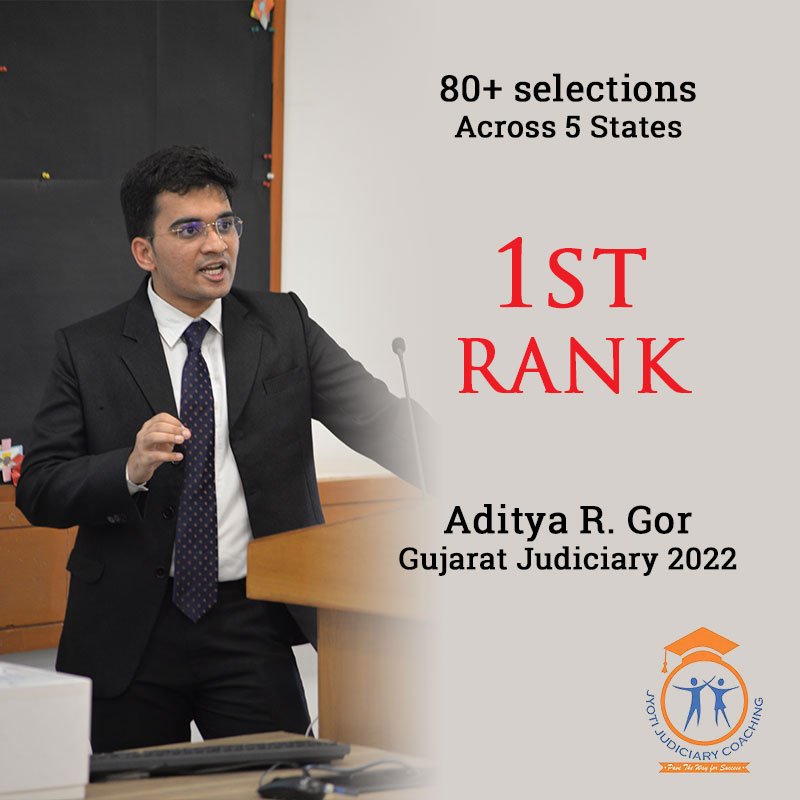
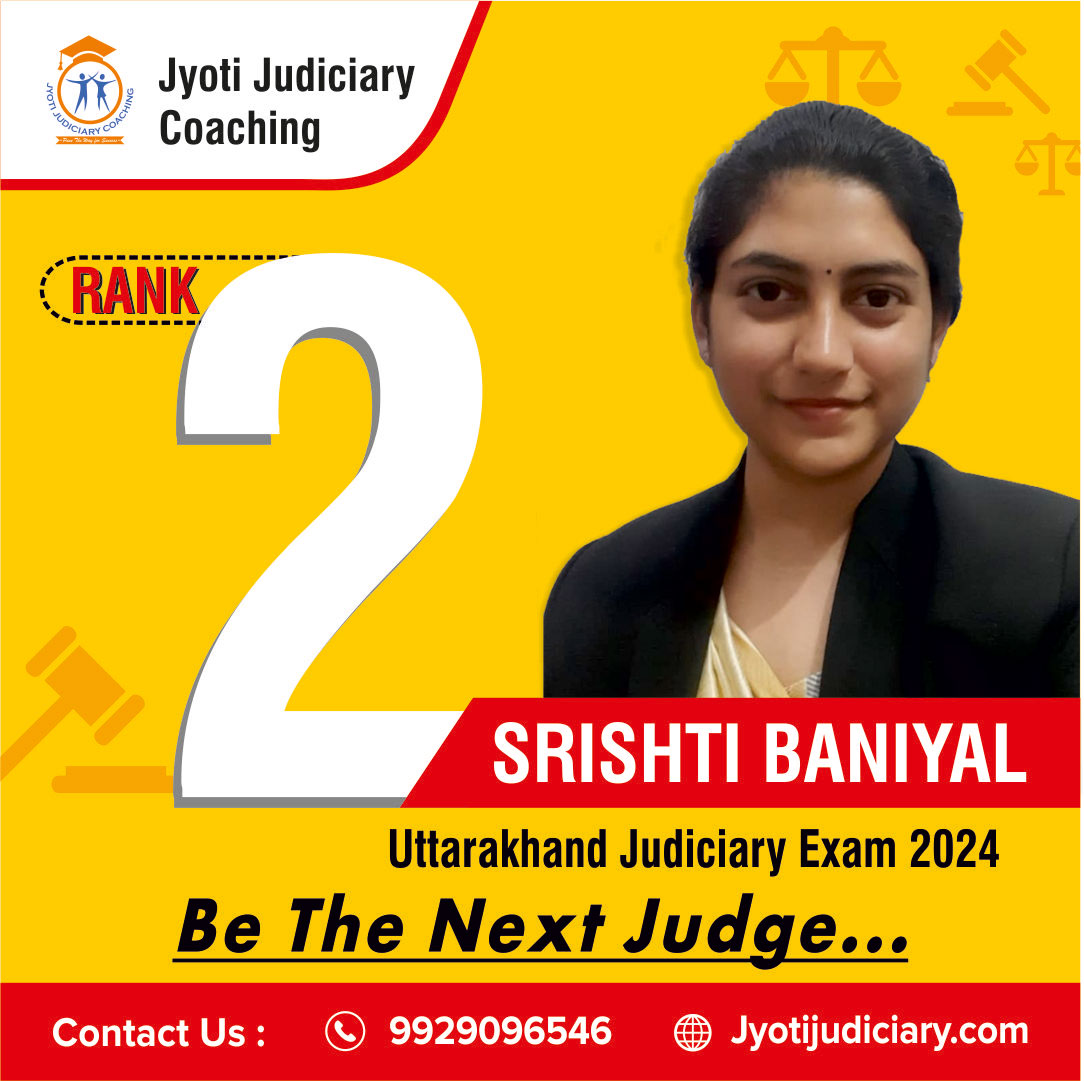
Founder and Chief Mentor, Jyoti Judiciary Coaching, Jaipur — results include 1st Rank GJS 2022, 2nd Rank UK PCSJ 2023, and 5th Rank RJS 2024. Working advocate track with flexible batches and mentor-reviewed answer writing: jyotijudiciary.com | +91 99290 96546
Note: The 3-year practice rule is based on the Supreme Court judgment dated 20 May 2025 in All India Judges Association v. Union of India. Verify current RJS eligibility requirements from the official Rajasthan High Court notification at hcraj.nic.in before applying.