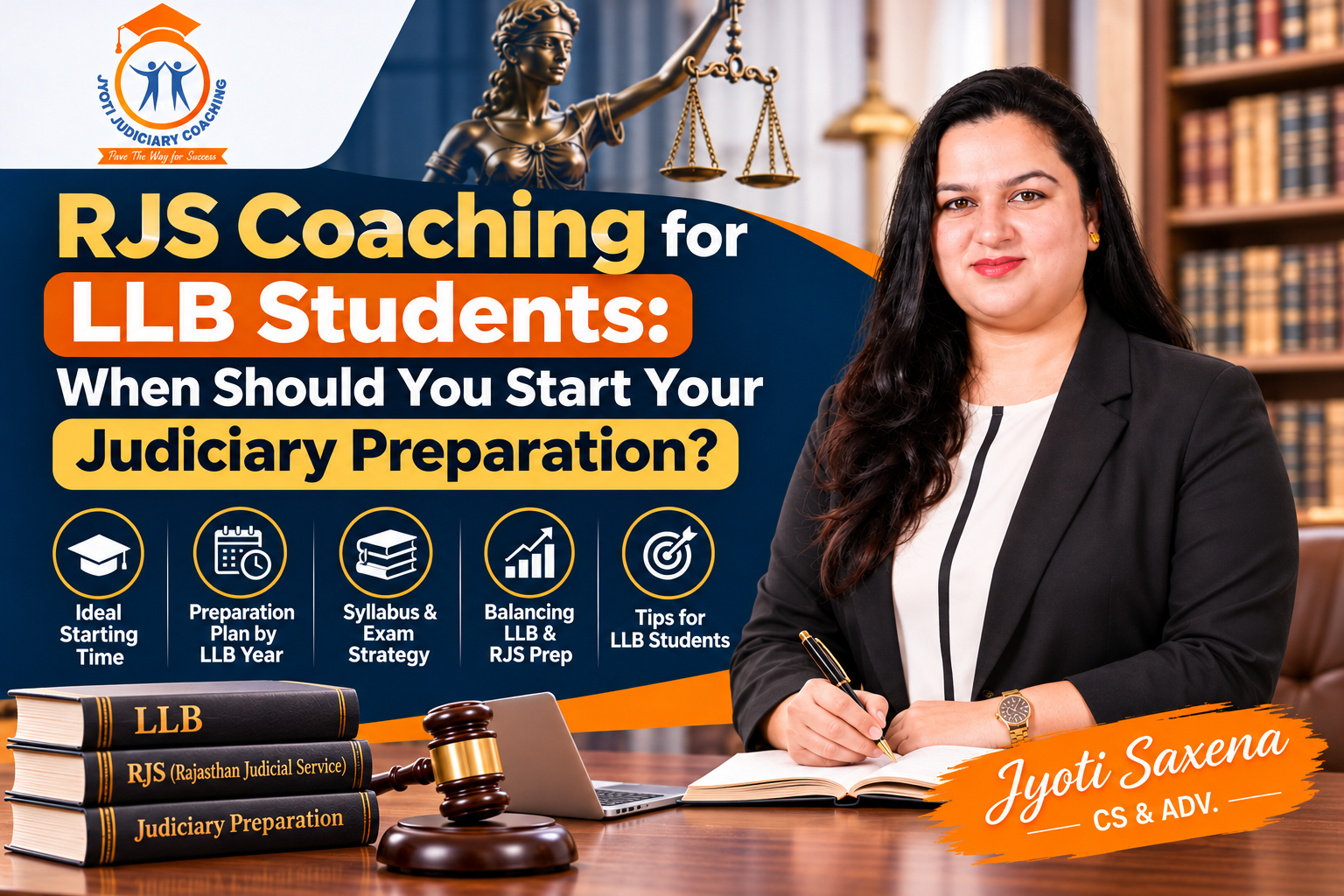
RJS Coaching for LLB Students: When Should You Start Your Judiciary Preparation?
Most LLB students ask this question too late — after they have finished their degree, given one or two attempts, and realised that they are competing against candidates who started preparing in their second year of college. Judiciary preparation is not something you pick up after graduation. The students who clear RJS in their first or second attempt almost always started early — while they were still in college.
This guide is specifically for 3-year LLB and 5-year LLB students who want to understand when to start, what to cover, and how to balance college with serious RJS preparation.
Why Early Preparation Gives You a Genuine Edge
Think about how JEE and NEET aspirants approach their preparation — they start in Class 9 or 10, build subject depth over years, and by the time the exam arrives, they are not learning; they are revising. The same logic now applies to judiciary preparation. Students who join a structured RJS coaching programme in their first or second year of LLB have two to three full years to cover the syllabus, revise multiple times, and appear in mock tests across every subject.
A student who starts in the final year of LLB has roughly eight to twelve months to do what an early starter did over three years. The syllabus is the same for both. The time is not.
When Should 3-Year LLB Students Start RJS Preparation?
For 3-year LLB students, the ideal time to begin judiciary coaching is the second year of your degree. By this point you have studied Contract Act, Transfer of Property Act, and basic procedural law — which gives you enough legal foundation to understand the RJS syllabus meaningfully.
That said, many students at Jyoti Judiciary Classes enrol in their first year itself. College subjects and judiciary subjects overlap significantly — studying them together means better retention and less repetition later. First-year students who join online classes can attend at their own pace without missing college lectures.
Year-wise Plan for 3-Year LLB Students
- First Year: Start with foundational subjects — Constitution of India, Indian Penal Code, and Contract Act. Attend online judiciary coaching classes alongside college. Give monthly tests to track where you stand.
- Second Year: Cover procedural laws — CPC, CrPC, Evidence Act. Start essay writing practice. Attempt full-length mock papers at least once a month. This is the most productive year of your preparation.
- Third Year: Revise all subjects, focus on judgment writing, solve previous year RJS papers, and fine-tune weak areas. By exam time, you are in revision mode — not learning mode.
When Should 5-Year LLB Students Start RJS Preparation?
For integrated 5-year law students, the third year is the natural starting point. By the third year, you have covered enough substantive law to engage with the RJS syllabus seriously. Starting here gives you two full years before the final year pressure hits — enough time for two complete revisions of the syllabus.
However, students who start in their second year of a 5-year programme have also done well — the extra year of preparation gives more room for deep reading, moot court participation, and subject mastery that reflects directly in RJS Mains answers.
Year-wise Plan for 5-Year LLB Students
- Third Year: Begin with Constitution, IPC, and Contract Act. Join online RJS coaching classes that run alongside your college timetable. Build reading habits for case laws and landmark judgments.
- Fourth Year: Cover procedural subjects and special laws. Attempt mock tests regularly and join a dedicated mains writing practice batch. Start solving previous year RJS papers.
- Fifth Year: Complete revision cycle, focus on weak areas, and appear in full-length mock tests. By the time you graduate, you should be exam-ready.
How Jyoti Judiciary Classes Supports LLB Students
Jyoti Judiciary Classes, run by Advocate Jyoti Saxena, is designed to work alongside your college schedule — not against it. Whether you are in your first year of LLB or your fourth year of a 5-year programme, the institute has a course structure that fits your stage of preparation.
- 1-Year, 2-Year, and 3-Year Course Options: Depending on where you are in your LLB and how much time you have before the exam, you can choose a course duration that matches your preparation window. Students who join early opt for 2-year or 3-year batches; those closer to the exam join the 1-year intensive batch.
- Online and Offline Classes: LLB students studying anywhere in India can attend live online classes without relocating. Students in Jaipur have the option of offline classes as well. Both formats run simultaneously.
- 2-Way Live Communication: Classes are not recorded lectures you watch passively. Students can unmute and ask questions directly during live sessions. Advocate Jyoti Saxena addresses doubts in real time — the same interaction you get in a classroom, through your screen.
- Personal Mentorship from Advocate Jyoti Saxena: With 12+ years of courtroom and advocacy experience, Jyoti Ma’am personally mentors students through difficult subjects and mains answer writing. This level of direct access to the faculty is rare in judiciary coaching.
- Multistate Judiciary Coverage: Preparation is not limited to Rajasthan. The curriculum covers multiple state judiciary exams so students have more options and more attempts to clear the bench.
- Saturday Mock Tests: Weekly tests keep preparation honest. Students get regular performance feedback and can see exactly which areas need more work before the exam.
See the Teaching Style Before You Decide
One of the best things about joining Jyoti Judiciary Classes is that you do not have to take anyone’s word for the quality of teaching. Jyoti Ma’am’s classes are available on YouTube, Instagram, and Facebook — you can watch how she explains subjects, how she handles student questions, and how she approaches judgment writing and essay practice before you enrol.
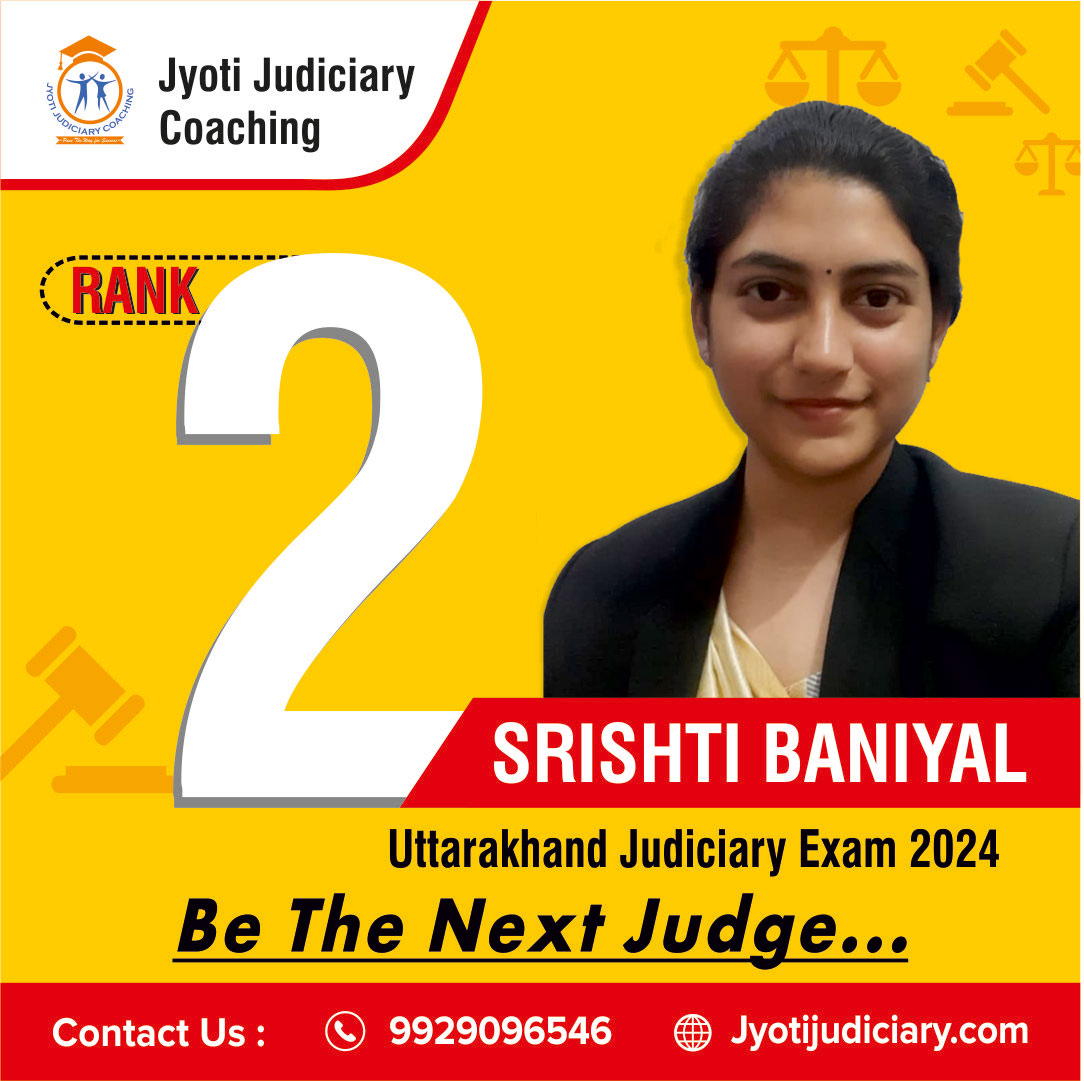
The institute has produced rank holders across multiple state judiciaries. With 468+ selections, the results speak for what consistent, early preparation under structured guidance can achieve.
Frequently Asked Questions
Can I start RJS coaching in the first year of LLB?
Yes. Many students at Jyoti Judiciary Classes start in the first year itself. Constitution and IPC — which form the foundation of the RJS syllabus — are also taught in the first year of LLB, so studying them together saves time and builds stronger understanding.
Can I attend online RJS coaching while studying in college?
Yes. Online live classes at Jyoti Judiciary Classes are scheduled to work around college hours. You can attend from anywhere in India, ask questions directly in the live session, and access recorded classes if you miss a session.
Which course duration is right for an LLB student — 1 year, 2 year, or 3 year?
It depends on where you are in your degree. A first-year LLB student should consider a 2-year or 3-year batch. A second-year student can join a 2-year batch. A student in the final year should opt for the 1-year intensive course. Jyoti Judiciary Classes offers all three options.
Does Jyoti Judiciary Classes cover only RJS or other state judiciaries too?
The institute covers multistate judiciary exams, so preparation here is not limited to Rajasthan. Students preparing for PCS-J, Gujarat Judiciary, Bihar Judiciary, and other state services are part of the same batches.
How is Jyoti Judiciary Classes different from other online judiciary coaching?
The key difference is 2-way live communication — students can unmute and ask questions directly during class, not just type in a chat box. Personal mentorship from Advocate Jyoti Saxena, weekly mock tests, judgment writing workshops, and a proven result track record of 468+ selections make the learning experience substantively different from passive video-based coaching.